An investment property can serve you well for years and still reach a point when a different property better fits your goals. Perhaps you want to move your rental portfolio closer to home, change the type of property you own, or establish an investment on Oʻahu.
A properly structured 1031 exchange may help you make that transition while deferring tax on qualifying gain. For an investor considering Hawaiʻi Kai, the property at Nanea Kai, 7018 Hawaii Kai Drive #5-2, offers a property worth evaluating. It is currently offered at $925,000.
As a Broker-In-Charge at Hawaiʻi Life, before recomending a 1031 Exchange purchase, I always ask clients these two questions: Does the exchange fit your financial plan, and does the property make sense to own after the exchange is complete?
What a 1031 Exchange Can Accomplish
Section 1031 allows qualifying real estate held for investment or business use to be exchanged for other qualifying investment or business real estate, with recognition of gain deferred when the requirements are satisfied.
The term “like-kind” is broader than it may sound. You do not necessarily have to replace a condominium with another condominium or stay in the same state. A mainland rental house, for example, may be exchanged for an Oʻahu condominium that will also be held for investment. Different types of qualifying U.S. real estate can be like-kind.
A home used solely as a personal residence does not qualify under the investment-property rules, and buying a property for immediate personal occupancy generally does not meet the replacement-property requirement.
The benefit is tax deferral. Deferred gain generally carries forward through the replacement property’s tax basis. That can leave more capital invested, but it does not automatically eliminate the eventual tax obligation.
For an owner considering a change in location or property type, that distinction makes an exchange worth discussing before the existing property is sold.

A Closer Look at Nanea Kai
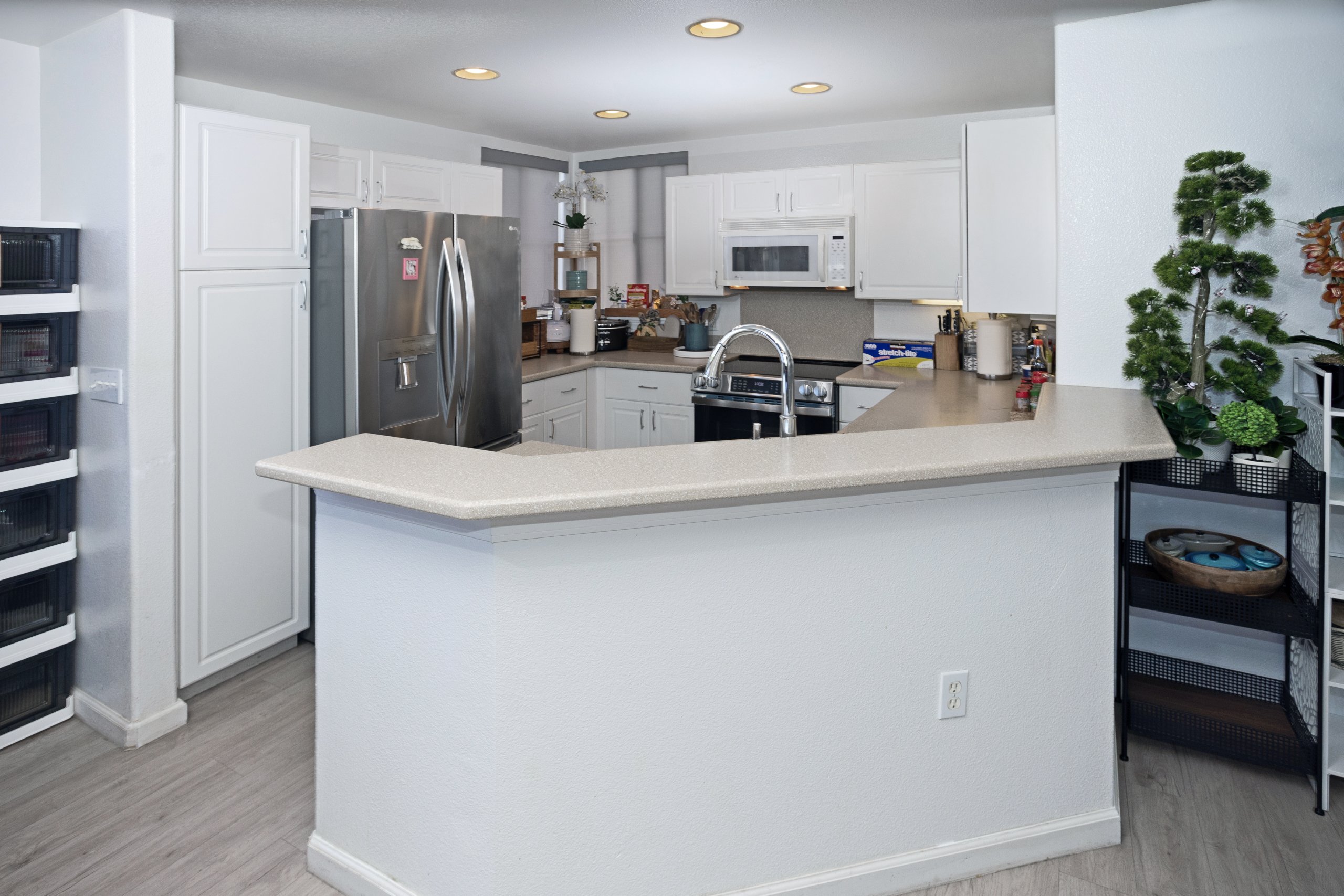
The property at 7018 Hawaii Kai Drive #5-2 is a fee simple, townhome-style condominium in Hawaiʻi Kai’s West Marina neighborhood. Its combination of interior space, parking, and everyday convenience gives an investor several practical features to consider.
| Property feature | Listing details |
|---|---|
| Asking price | $925,000 |
| Ownership | Fee simple |
| Bedrooms and bathrooms | 3 bedrooms and 2.5 bathrooms |
| Interior living area | Approximately 1,466 square feet |
| Layout | Multiple levels with separation between living and sleeping areas |
| Parking | A one-car garage of approximately 201 square feet, plus one open stall |
| Comfort and outlook | Central air conditioning; canal and mountain views |
| Year built | 2003 |
| Community | Nanea Kai is pet-friendly, subject to association rules |
Property information is drawn from the current listing and syndicated MLS details. Verify specifications, association rules, price, and availability before making an offer.
View the listing and photographs on Hawaiʻi Life.
When evaluating the home as a potential rental, I would pay attention to how those features work together. Three bedrooms provide flexibility for sleeping space, guests, or a home office. The garage and additional stall address a practical parking need. The multi-level design gives occupants separation between activities, although buyers should also consider whether stairs fit their intended use.
The property has refreshed interiors and access to shopping, dining, and recreation in Hawaiʻi Kai. Those are useful points to evaluate when comparing competing rentals. They are not a substitute for a current rental analysis or a guarantee of occupancy.
For an investor who prefers a townhome setting, this is a property to place on the comparison list.
Start Planning Before Your Sale Closes
For a typical delayed exchange, involve your CPA and a qualified intermediary, often called a QI, before the relinquished property closes. The QI helps structure the exchange and handles the exchange proceeds under the required agreement. Receiving or controlling the proceeds yourself can prevent the transaction from qualifying.
Your real estate agent, tax advisor, intermediary, escrow officer, and lender should be working from the same timeline.
Two standard deadlines deserve particular attention:
| Exchange milestone | Standard deadline |
|---|---|
| Identify replacement property | Within 45 calendar days after transferring the property you are selling |
| Acquire replacement property | By the earlier of 180 days after that transfer or the due date of your tax return for the transfer year, including extensions |
The 45-day identification period is part of the overall exchange period. It is not followed by another 180 days. Identification generally must be in writing, signed, and delivered to the appropriate exchange party. For a late-year sale, ask your CPA whether a tax-return extension is needed to preserve the full 180-day window.
My practical recommendation is to research properties and financing before your sale closes. If Nanea Kai fits your criteria, review it early, alongside any backup properties your intermediary advises you to identify.
An exchange deadline is a reason to prepare thoroughly. The property still needs to fit your goals.
How the Numbers Might Work
Consider this hypothetical example, using the listing’s $925,000 asking price. Assume the properties qualify, the exchange is properly arranged, and transaction costs are excluded for simplicity.
| Item | Illustrative amount |
|---|---|
| Sale price of an existing investment property | $850,000 |
| Mortgage paid off at that sale | $300,000 |
| Equity directed into the exchange | $550,000 |
| Purchase price of the replacement property | $925,000 |
| Additional funding needed | $375,000 |
The buyer would apply the $550,000 of exchange equity toward the purchase and fund the remaining $375,000 with financing, additional cash, or a combination.
For full deferral, the usual planning goal is to buy replacement property of equal or greater value and reinvest all exchange equity, allowing for eligible exchange expenses. Cash retained or net debt relief can create taxable gain, often called “boot.” Additional cash can substitute for replacement borrowing; you do not necessarily need a new mortgage matching the old one.
This example illustrates funding, not a personalized tax calculation or loan offer. Your CPA and intermediary need to determine the actual reinvestment requirement, treatment of costs, and potential tax consequences.

Evaluate the Investment Beyond the Exchange
For Nanea Kai, I would focus the property review on these questions:
- What rent is supported by current comparable properties? Use a current rental analysis, then allow for vacancy, leasing costs, and property management.
- What is the complete ownership budget? Include association fees, property taxes, insurance, maintenance, utilities paid by the owner, applicable rental taxes, and financing.
- What do the association documents show? Review the budget, reserves, insurance coverage and deductibles, meeting minutes, planned work, and any assessments.
- What rental use is permitted? Confirm applicable law and association restrictions, including minimum lease terms. Do not assume vacation rental use is allowed.
- What does the inspection reveal? Assess condition and likely repair or replacement costs, including the air conditioning, appliances, and interior components.
- Can the transaction meet your deadline? Confirm availability, seller timing, financing requirements, and the time needed for inspections and document review.
These questions help turn an attractive listing into an informed investment decision. I would want an exchange buyer to understand the expected income, expenses, and responsibilities before committing.
A 1031 exchange can improve how a purchase is funded. The quality of the underlying investment still matters.
If Living in Hawaiʻi Is Part of Your Longer Term Plan
Some buyers want an investment today and may hope to occupy the property themselves later. Discuss that intention with your tax advisor before acquiring the property.
The IRS has a dwelling-unit safe harbor with specific ownership, fair-market rental, and personal-use conditions. Those rules require more care than simply renting a home briefly before moving in. The safe harbor also does not replace the other exchange requirements.
If future personal use matters to you, build that discussion into the plan from the beginning.
Considering an Exchange Into Hawaiʻi Kai
If you are selling investment real estate on Oʻahu or the mainland, I would be happy to help you evaluate Nanea Kai #5-2 alongside other properties that fit your purchase range and ownership goals.
We can review the home, discuss its features and operating costs, and coordinate the purchase timeline with your qualified intermediary and other advisors. Your tax professionals can determine whether the proposed exchange meets your circumstances.
Contact me to arrange a showing or discuss whether this Hawaiʻi Kai property belongs on your replacement-property list. I look froward to chatting with you soon. Aloha, Jon.
Jon S. Mann
REALTOR® Broker, Broker-In-Charge
Hawaiʻi Life Real Estate Brokers
Phone: (808) 728-1230
Email: jon.mann@hawaiilife.com
Explore 7018 Hawaii Kai Drive #5-2.
Listing price and information checked October 28, 2026. Price and availability may change. This article provides general information, not tax or legal advice. Consult your CPA, attorney, and qualified intermediary about your exchange, including applicable federal and state requirements.
Sources and Further Reading
- Hawaiʻi Life listing for 7018 Hawaii Kai Drive #5-2
- HiCentral MLS #202609534 details syndicated on Zillow
- IRS: Like-Kind Exchanges — Real Estate Tax Tips
- IRS Publication 544: Sales and Other Dispositions of Assets
- IRS: Sales, Trades, Exchanges — Frequently Asked Questions
- IRS: Instructions for Form 8824
- IRS Revenue Procedure 2008-16: Dwelling-Unit Safe Harbor

Leave your opinion here. Please be nice. Your Email address will be kept private, this form is secure and we never spam you.